
Benefits of Professional Post Construction Cleaning

Table of Contents
What Professional Post Construction Cleaning Actually Includes
How to Remove Paint Spills from Commercial Flooring Safely
Your Post Construction Cleaning Checklist for Every Room
Post Construction Cleaning Rates Per Square Foot: What Drives the Price
Health, Safety, and Regulatory Compliance on Site
Protecting Your Investment and Achieving Move-In Ready Results
Frequently Asked Questions
Last Updated: September 26, 2026
What Professional Post Construction Cleaning Actually Includes
Professional post construction cleaning is the specialized process of removing construction dust, debris, and residue from a newly built or renovated space so it is safe, presentable, and ready for occupancy. This guide from RC Cleaning Services, LLC breaks down what the service covers and how to prepare a site for a final walkthrough.
It is not the same as routine janitorial work. Standard office cleaning maintains a finished space; post construction cleaning prepares an unfinished one. The distinction matters because the tools, labor, and safety requirements are different. A crew arriving with mops and a vacuum will not clear drywall dust from ductwork or scrub cement film off a glass facade.
A typical scope covers three phases:
Rough cleaning removes bulk debris, packaging, and scrap material
Final cleaning handles fine dust removal, surface protection removal, and fixture detailing
Touch-up cleaning addresses what the final walkthrough or inspection reveals
Industrial-grade equipment matters here. HEPA filtration vacuums capture particles that standard vacuums recirculate, and air quality improves measurably when fine dust is removed at the source rather than swept into the air.

Pro Tip Schedule the final cleaning after all trades have finished, but build in a buffer. If a painter or electrician returns for punch-list work after your crew leaves, you will pay for a second visit.
How to Remove Paint Spills from Commercial Flooring Safely
Paint, primer, texture overspray, and joint compound are the residues that separate a post-construction clean from a standard janitorial pass. Removing them safely means matching the removal method to both the coating and the substrate, and testing in a hidden area first. The wrong solvent can etch concrete sealant, dull vinyl composition tile, or leave a permanent haze on polished stone.
Work through this sequence:
Identify the coating. Water-based latex and acrylic respond to warm water and a mild detergent while still fresh. Cured oil-based, alkyd, and two-part epoxy coatings need a chemical stripper or a plastic scraper. Joint compound and drywall mud are water-soluble but set hard, so they need dwell time rather than force.
Identify the substrate. Sealed concrete, VCT, epoxy coatings, luxury vinyl plank, and polished stone each tolerate different chemicals. Solvent-based strippers can soften VCT adhesive and cloud a stone sealer.
Test a small, hidden spot. Apply your chosen method, wait the full dwell time on the label, and check for discoloration, hazing, or surface damage before scaling up.
Work from the edges inward. Lift the film rather than gouging at the center, and keep a plastic razor blade at a low angle to avoid digging into the substrate.
Rinse and dry completely. Residual solvent attracts dirt and can weaken the next coat of finish or floor sealer.
For cured paint on hard surfaces, a plastic razor blade or a nylon scraper does less damage than metal.
A few substrate-specific notes that generic guides skip:
Sealed concrete: avoid acidic cleaners, which dull the sealer and shorten its service life.
VCT and vinyl: never flood the seams; moisture wicks under the tile and loosens adhesive.
Polished stone: use a pH-neutral cleaner and a stone-safe poultice for stains rather than an aggressive solvent.
Glass and metal frames: cement film and overspray come off with a plastic scraper and a non-ammoniated cleaner; ammonia can attack anodized finishes.
Watch Out Never use metal scrapers or wire brushes on polished concrete or vinyl. The scratches they leave cannot be buffed out, and the floor has to be refinished or replaced.
This is also where the post-construction-versus-janitorial distinction shows up in practice. A standard cleaning crew carries all-purpose cleaner and a mop; a post-construction crew carries the strippers, plastic scrapers, and substrate-specific chemistry that cured construction residue actually requires. That difference in chemical strength and tooling is the reason a specialist is brought in for the final pass rather than the regular janitorial vendor.
Your Post Construction Cleaning Checklist for Every Room
A room-by-room post construction cleaning checklist keeps crews from missing the areas that inspections flag. Generic checklists fail because a bathroom, a server room, and an open office have completely different cleaning priorities.
Here is how to structure it:
Room Type | Priority Tasks | Watch For |
Restrooms | Descale fixtures, polish mirrors, sanitize all surfaces | Grout haze, silicone smears |
Open office | HEPA vacuum all surfaces, wipe outlets and switches | Dust in cable trays, vent grilles |
Kitchen or break room | Degrease appliances, clean cabinet interiors | Adhesive residue, sawdust in drawers |
Server or electrical rooms | Dry dust only, no liquids | Dust in cooling fans, static risk |
Entry and lobby | Floor finishing, window cleaning, glass polish | Cement film on glass, scuffed baseboards |
Key Takeaway Walk the space with a flashlight held at a low angle before signing off. Raking light exposes dust films that look invisible under normal overhead lighting.
Post Construction Cleaning Rates Per Square Foot: What Drives the Price
Per square foot. The most common for large commercial builds, because it scales predictably with floor area. The rate is set after a walkthrough that assigns a condition tier to the space.
Hourly, with an estimated labor range. Common for smaller or phased projects where the scope is uncertain. The bid states a crew size and an hour range, and the invoice tracks actual hours.
Flat project bid. Common for defined scopes where the provider has enough information to absorb the risk of overrun. Usually the highest headline number and the easiest to budget against.
Condition of the site. Heavy debris removal and hazardous waste disposal cost more than a light dusting pass. A space left mid-punch-list prices differently than one turned over clean by the trades.
Square footage and ceiling height. Taller spaces need lifts, scaffolding, and more time per surface. A warehouse with 30-foot ceilings is not priced like an office with 9-foot ceilings.
Number of phases. Rough, final, and touch-up cleaning are separate line items. A bid that bundles all three into one figure hides where the labor actually goes.
Surface types. Polished stone, glass facades, exposed ductwork, and specialty coatings take longer than drywall and carpet.
Access and scheduling. After-hours, weekend, or phased work adds labor cost. Limited elevator access or a single entry point adds time.
Green cleaning requirements.
Distance and disposal.
Pro Tip Ask for the estimate in writing with the phase breakdown, the assumed square footage, and the disposal method. That document is what protects you if the scope shifts mid-project.
A note on green cleaning. Environmentally preferable products and proper disposal of construction chemicals are increasingly requested by commercial clients and can affect both the product cost and the handling time. If your project has sustainability goals, raise them before the estimate is written so it reflects them.
Health, Safety, and Regulatory Compliance on Site
Construction dust is not just a cosmetic problem. Fine silica particles from concrete cutting and drywall sanding stay airborne for hours and pose a documented respiratory hazard, which is why occupational safety standards treat dust control as a site requirement rather than a finishing touch.
Compliance touches several areas:
Air quality. HEPA filtration and negative air machines keep dust from migrating into occupied areas of a building.
Hazardous waste disposal. Solvents, paint cans, and adhesives must be handled and disposed of according to state and local rules, not tossed in a general dumpster.
Site safety. Crews working around live electrical panels, uneven floors, or unfinished stairwells need proper lighting and protective equipment.
Workplace health. A space that passes inspection but still sheds dust puts future occupants at risk.
Protecting Your Investment and Achieving Move-In Ready Results
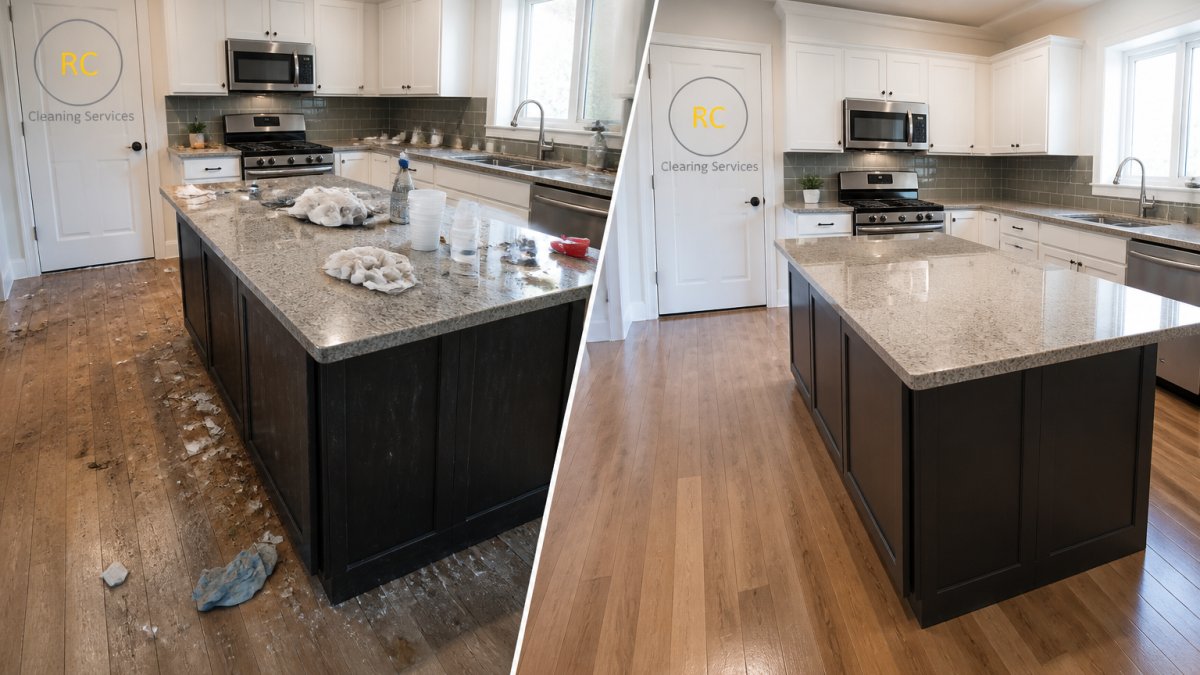
Move-in ready results protect the money you have already spent. Construction debris left in place scratches new flooring, clogs HVAC systems, and voids manufacturer warranties on finishes. A thorough post-build cleaning is the step that converts a construction site into an asset.
A few practical points for project turnover:
Confirm the cleaning scope in writing before the crew arrives
Schedule the final walkthrough for daylight hours
Keep a punch list open for touch-up cleaning after any trade returns
Document the condition of the space with photos at handover
Pro Tip Book your cleaning date the moment your construction schedule is firm. Good crews fill their calendars weeks out, and a rushed booking means a compromised scope.
Frequently Asked Questions
What is the purpose of post-construction cleaning?
Post-construction cleaning removes the construction debris, fine dust, and hazardous residues left behind after a build or renovation. It prepares the space for occupancy by addressing air quality, surface protection, and regulatory compliance. A professional team uses industrial-grade equipment and HEPA filtration to capture particles that standard cleaning cannot. The goal is to deliver a safe, move-in ready environment that passes final walkthrough inspections.
What does a post construction cleaning checklist include?
A post construction cleaning checklist covers fine dust removal from all surfaces, construction debris disposal, window cleaning inside and out, floor finishing, HVAC vent cleaning, and sanitization of high-touch areas. It also includes paint spill removal, adhesive residue treatment, and a final walkthrough inspection. Room-by-room checklists ensure no detail is missed, from light fixtures to baseboards and corners.
How much can you charge for post construction cleaning?
Post construction cleaning rates per square foot vary based on project size, debris volume, surface types, and level of finish required. Pricing depends on the scope of work, site conditions, and timeline. For an accurate estimate, request a personal consultation where a provider can assess the specific needs of your commercial or residential site.
Why is specialized equipment necessary for construction cleanup?
Standard vacuums and mops cannot capture the fine dust produced during construction. Industrial-grade equipment with HEPA filtration traps particles that would otherwise damage air quality and settle on surfaces after cleaning. Specialized tools also handle hazardous waste disposal, surface protection, and floor finishing safely. Using the right equipment prevents recontamination and ensures a truly clean, compliant space.
A post-construction site that fails its walkthrough costs you time, rework, and credibility with the client. RC Cleaning Services, LLC takes that risk off your plate with personal consultations, accurate project estimates, and reliable, timely delivery backed by quality assurance. Whether you need final construction cleaning, rough construction cleaning, or recurring janitorial services, get started with RC Cleaning Services, LLC and hand over a space that is genuinely move-in ready.
BOOK ONLINE
Comments